


Most pest control businesses run smoothly when the owner can directly oversee daily operations. Scheduling is simple, customer notes are easy to track, and technicians communicate in real time.
As the business grows, that visibility starts to break down.
More technicians, recurring services, routing changes, and customer requests introduce complexity that manual systems cannot keep up with. What once worked begins to create gaps.
Most owners do not recognize this as a visibility problem at first. Instead, they see the symptoms:
• missed service details
• inconsistent technician performance
• customer complaints
• billing confusion
• schedule disruptions
These issues are not random. They are signs that the business has outgrown its operational systems.
This article explains how pest control companies lose visibility as they scale and how pest control management software helps restore control through centralized operations.
In the early stages of a pest control business, operations are simple by design.
The owner is often directly involved in scheduling, customer communication, and technician oversight. There are fewer jobs, customers, and moving parts, which makes the operation easy to manage.
At this stage:
This level of control creates a sense of confidence. The business feels organized, even without formal systems.
The limitation is that these methods do not scale.
As job volume increases and teams expand, the same processes that once worked begin to create friction.
Growth introduces complexity faster than most systems can adapt.
Adding technicians increases the number of daily jobs, customer interactions, and schedule changes. Recurring services create long-term scheduling layers that must be tracked accurately. Routing becomes more dynamic as service areas expand.
Manual tools were never designed to manage this level of coordination.
What works with one or two technicians starts to break down as the team grows. Information becomes harder to track, and small gaps begin to appear.
Over time, those gaps turn into operational blind spots.
As more technicians are in the field each day, it becomes difficult to track what is actually happening in real time.
Owners may not know:
Without clear insight into technician activity, decisions become reactive.
This leads to inconsistent performance across the team, with some technicians operating efficiently while others fall behind without correction.
Customer information is one of the first areas to break down as businesses grow.
Service notes, treatment history, billing details, and communication records often end up spread across:
When this information is not centralized, consistent service becomes difficult to maintain.
A technician may arrive at a property without knowing the full service history. An office team member may not have access to the latest notes. Customers are then forced to repeat information, which creates frustration.
Over time, this fragmentation impacts service quality and customer retention.
Scheduling is where complexity becomes most visible.
Recurring pest control services must be tracked alongside one-time jobs. Emergency calls must be worked into existing routes. Technician availability must be considered daily.
Without centralized pest control scheduling software, schedules are often managed manually or across disconnected tools.
This is often when schedules begin to break down entirely, as explained in Why Pest Control Schedules Fall Apart as You Grow (And How Software Prevents It).
This leads to:
What once took minutes to manage can begin consuming hours each day.
When visibility declines, the impact is rarely immediate.
Instead, small inefficiencies accumulate across the business.
These inefficiencies affect productivity, customer experience, and revenue over time.
Without reliable data, it becomes difficult to evaluate technician performance.
Owners may not have clear answers to questions like:
Without this insight, it is nearly impossible to identify inefficiencies or improve performance.
This often results in uneven workloads and missed opportunities to optimize routes and schedules.
When customer history is incomplete or hard to access, service quality suffers.
Customers may receive different experiences depending on:
Inconsistent service leads to:
For recurring pest control services, consistency is critical. When that consistency breaks down, long-term customer relationships are at risk.
As visibility decreases, administrative work increases.
Office teams often spend large portions of their day:
Instead of supporting growth, the office becomes reactive.
This reactive work often includes handling last-minute changes and missed appointments, as outlined in Why Pest Control Businesses Struggle With Last-Minute Changes.
This not only increases labor costs but also slows down the entire operation.
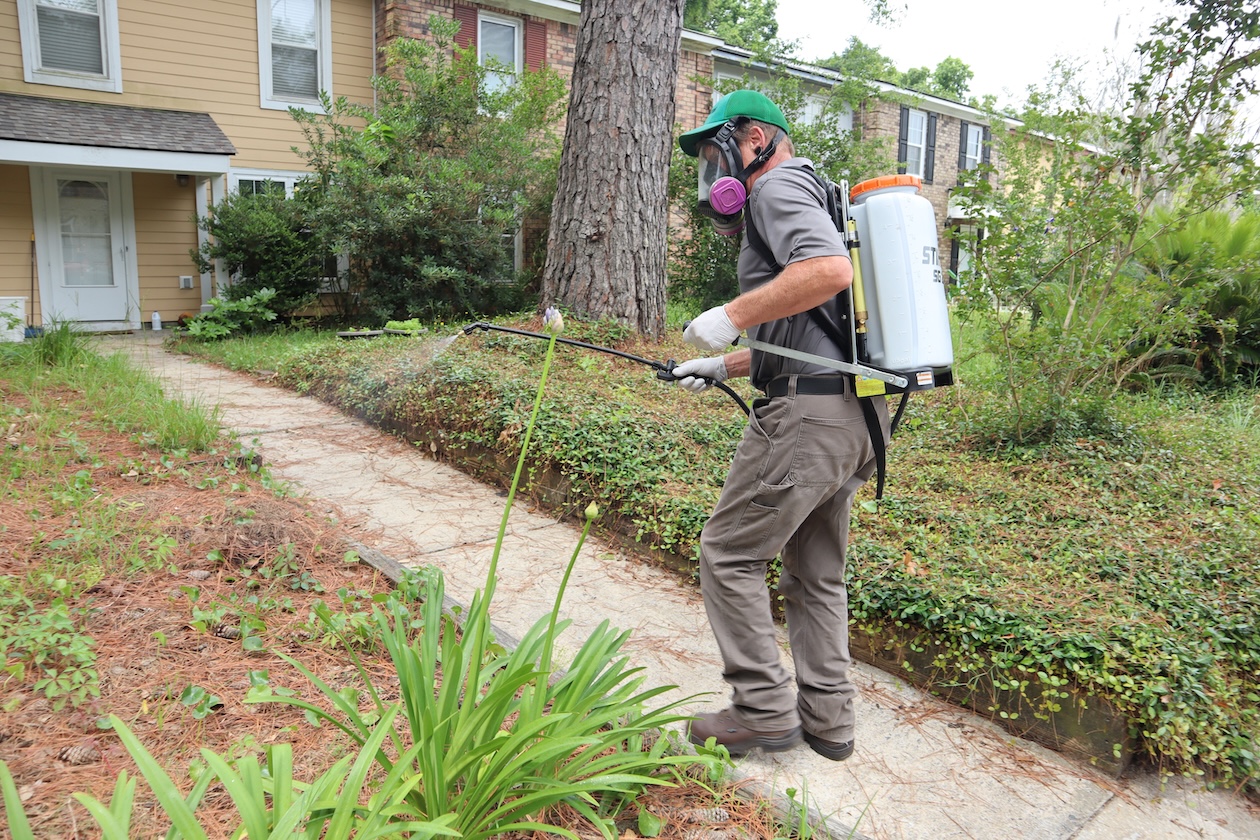
Spreadsheets and disconnected tools are not inherently flawed. They are simply limited.
They were designed for simple tracking, not for managing complex service operations.
As a pest control company grows, these limitations become more pronounced.
Manual systems lack:
As a result, information becomes fragmented.
Many businesses try to fix these gaps by adding more spreadsheets or tools. In reality, this often makes the problem worse.
Instead of improving visibility, it increases complexity.
This is the point where many companies begin searching for pest control business software or a pest control CRM software solution.
Structured systems are designed to handle operational complexity.
Pest control management software brings scheduling, customer data, technician activity, and communication into one centralized platform.
This creates a single, reliable source of truth across the business.
With the right pest control company software in place, owners can:
Instead of relying on scattered information, the entire operation becomes visible in one place.
This level of visibility allows owners to make informed decisions quickly.
It reduces reliance on memory, manual tracking, and constant back-and-forth between team members.
Growth does not have to come at the cost of control.
Pest control companies that implement structured systems early are better positioned to scale efficiently without losing control of their operations.
With the right pest control management software in place, businesses can:
The key is recognizing when manual systems are no longer enough.
Loss of visibility is not a failure. It signals that your business has reached a stage where operations require structure, not more workarounds.
Fieldster is designed specifically for pest control companies that are moving beyond manual systems.
Instead of relying on disconnected tools, Fieldster brings scheduling, routing, customer history, and job tracking into one centralized platform. This gives owners and office teams a clear, real-time view of what is happening across the business.
One of the biggest challenges in growing pest control companies is managing information across multiple systems.
Fieldster solves this by centralizing:
With everything in one place, teams no longer need to search across spreadsheets, emails, or paper notes to understand what is happening.
As teams grow, technician coordination becomes harder to manage without clear systems.
Fieldster helps standardize daily workflows by giving technicians access to:
This reduces confusion in the field and helps ensure services are completed consistently.
Many operational issues come from small gaps in communication or scheduling.
Fieldster reduces these gaps by keeping schedules, updates, and customer information aligned across the entire team.
This leads to:
As your business grows, having a clear view of your operation becomes critical.
Fieldster gives pest control owners the ability to see:
This level of visibility allows for faster decisions, better planning, and more consistent service delivery.
With Fieldster, pest control companies can scale confidently, knowing their operations remain organized, visible, and under control.
Pest control companies often recognize operational issues before they understand the root cause. These common questions address how software fits into day-to-day operations and growth.
Pest control management software is a centralized system that helps pest control companies manage scheduling, customer information, technician activity, and billing in one platform.
Instead of relying on spreadsheets or disconnected tools, it provides a structured way to run daily operations and maintain visibility as the business grows.
Pest control CRM software is built specifically for service-based operations.
Unlike general CRM platforms, it includes features designed for pest control companies, such as:
General CRM tools focus on sales pipelines, while pest control CRM software supports full operational workflows.
Most companies should consider switching when manual systems start creating operational issues.
Common signs include:
At this stage, pest control business software helps restore structure and reduce manual coordination.

Features
Pricing
ABout
Site
Features
Pricing
ABout
Site